Systems fail at the human layer. Then we redraw the org chart.
Who I am
Saqiba Najam is a strategist, product thinker, and venture builder with over a decade of experience across emerging markets, enterprise transformation, and early-stage investing.
Founder of Elements Haus, a venture studio working in consumer tech, AI, and the individual economy. Previously Head of Transformation & EPMO at Jazz (Pakistan's largest digital operator), Head of Growth at Tabadlab. Strategy consultant with Webster Pacific, San Francisco. Product and technology work supported by the Bill Gates Foundation, building for rural communities in Sindh. Startup founder, US and Pakistan, 2017–2022. Fine artist. Poet.
How I work with people
I work with founders, investors, and organizations at inflection points, when the old map no longer works and the new one hasn't been drawn yet.
That might look like product strategy for a zero-to-one build. Helping an operator think through a transformation that actually sticks. Advising a VC on a market they're entering cold. Or building something entirely new from the ground up.
My particular edge: I've operated in environments where resources are constrained, trust is thin, and the conventional playbook is useless. That experience transfers everywhere.
If you're working on something that doesn't fit neatly into existing categories, that's usually where I'm most useful.
Elements Haus is my experiment studio, where ideas that don't yet fit into traditional containers get prototyped, stress-tested, and either launched or let go. Current focus: consumer tech, AI workflows, entertainment, and the individual economy.
I publish essays on technology, capital, design, and the texture of how the future actually arrives, as opposed to how it gets announced.
Based between Pakistan, US and Canada. I travel for the right conversations.
The $5B admission: The model is no longer the product.
The data tells the story: MIT’s Project NANDA recently revealed that a staggering 95% of custom enterprise AI pilots return zero measurable P&L impact. The breakdown isn’t happening because the models lack intelligence. It’s happening because they hit a wall when meeting legacy data, rigid workflows, and organizational inertia.
Charlie Munger always advised studying historical bottlenecks to understand where value naturally clusters. We are watching a well-worn playbook repeat itself:
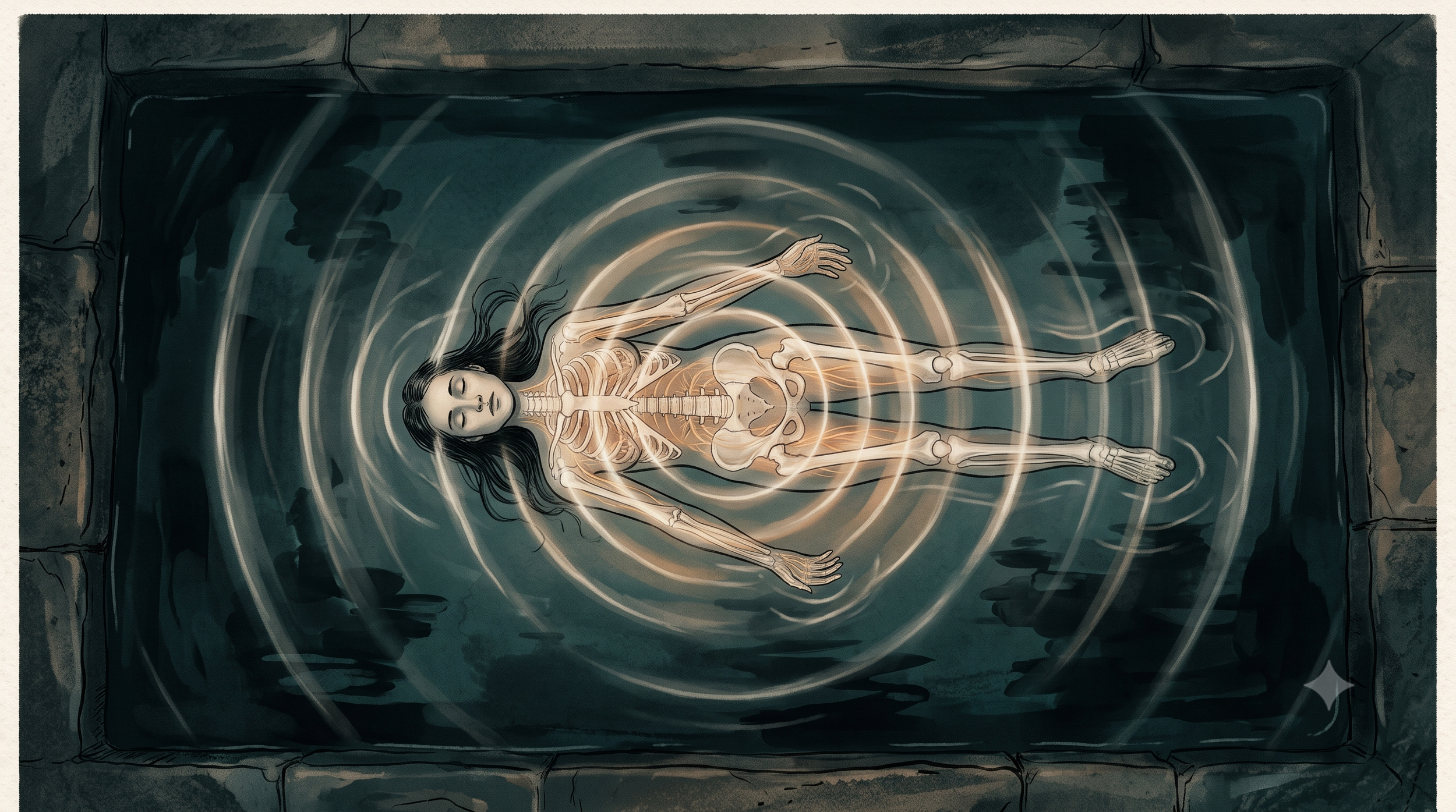
The man who built Midjourney made a machine that scans your body with sound. An essay on AI's return to atoms — chips, power, robots, and the body it asked for.
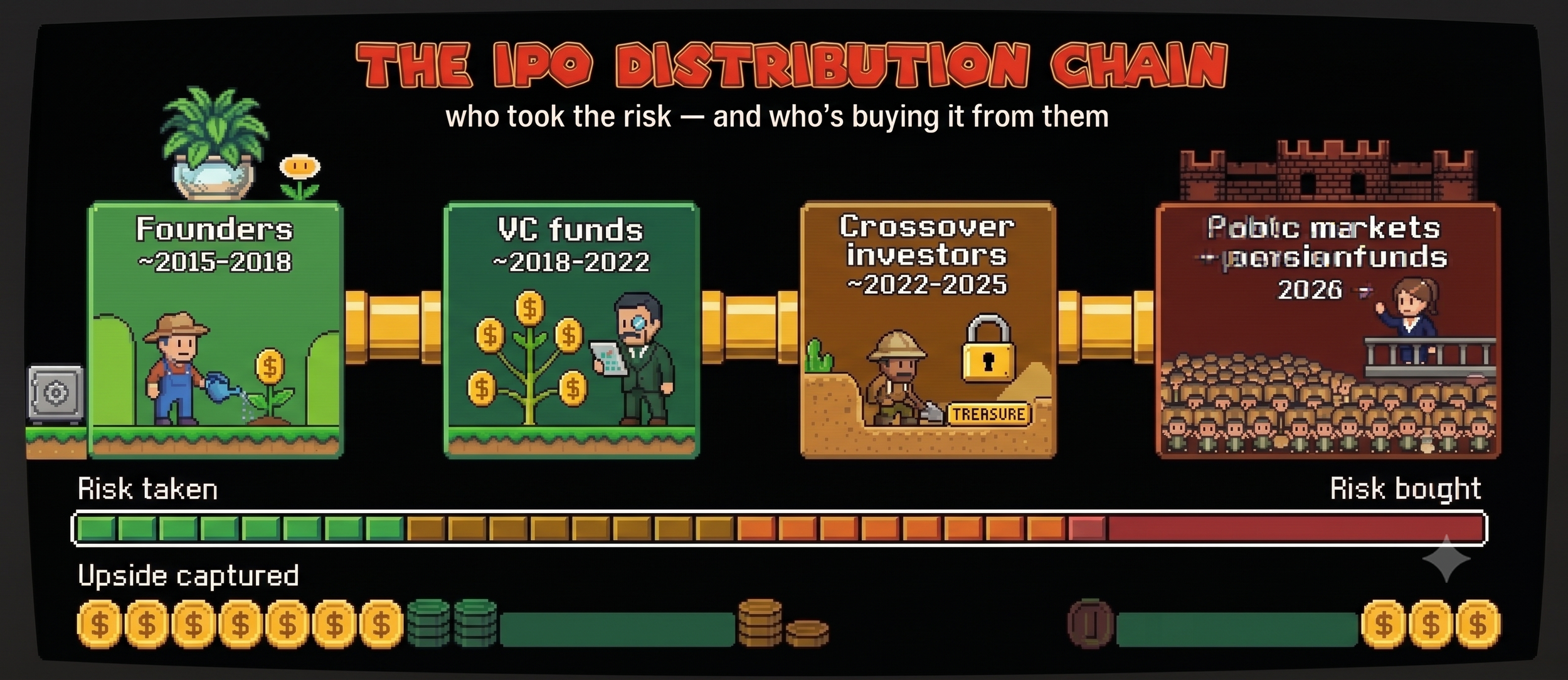
The convergence of AI and crypto is not about decentralized compute or AI tokens. The real opportunity lies in trust infrastructure: systems that combine cryptographic verification, content provenance, persistent identity, and economic accountability to make truth verifiable in a world of infinite synthetic media.
AI has made it trivially cheap to clone voices, generate faces, and fabricate video. Crypto — through primitives like public verification, immutable timestamps, and programmable trust — offers one of the only scalable paths to rebuilding authenticity online. This is why the largest venture funds in both industries are quietly converging on the same problem.

Venture capital isn’t purely rational. This essay explores how belief, psychology, and narrative shape investment decisions across markets like the US, Canada, and emerging ecosystems.

In an era of infinite noise, Stillness is the ultimate competitive advantage. This post explores the 'ROI of Stillness' through the lens of High Agency, Radical Accountability, and Decision Equity. Learn why increasing your 'Cognitive Voltage' is more valuable than increasing your velocity, and discover a curated reading list for the modern non-reactive builder.
We’re entering the Age of Personal Infrastructure—a transformative era where a single person can achieve what once required entire teams and organizations. Powered by AI copilots, no-code tools, and intelligent platforms, individuals now possess the ability to design, build, and scale systems entirely on their own.
This is not just a productivity boom—it’s a redistribution of power. Platforms like Replit, Vercel, Runway, Notion, and Gamma form the new digital stack of one, enabling creators, entrepreneurs, and operators to turn ideas into real-world impact faster than ever before.
In this AI age, humans no longer expand by adding people—they expand by integrating smarter tools. The most scalable unit of the economy is now the individual. This revolution redefines ownership, creation, and value at every level, ushering in an era where curiosity is capital and personal infrastructure is leverage.
For futurists, builders, and investors alike, understanding this shift is critical. The next wave of opportunity lies in tools that scale human potential, not replace it.

Trying to Understand Joy
By SN | Design, Philosophy, Everyday Beauty
Joy isn’t always loud. Sometimes it hums quietly — in a chair that fits, a font that breathes, a morning that feels aligned.
“Trying to Understand Joy” explores the soft side of design: clarity, discovery, connection, meaning, and the beautiful tension between constraint and rebellion.
It’s about how things that work well make us feel more human — and how design, when done with heart, becomes a love letter to life itself.
Read the full essay → Where simplicity meets feeling, and good design feels like a deep
ai trends
emerging tech
venture insights
platform shifts
AI in the Middle East is defined by what I call the Local + Global Duality. Startups here must root their innovations in local imperatives , Arabic NLP, sharia-compliant fintech, sovereign data laws, desert agriculture , while also proving global scalability to attract serious venture funding and international customers. Without local grounding, adoption stalls; without global reach, growth caps. The organizations that help founders master this duality , by providing localization labs, scale tracks, and developer enablement , will not only accelerate NVIDIA adoption but also shape the region’s role as an exporter of AI innovation.
Discover how neuroscience explains why rounded corners feel safe, blue builds trust, and grids calm our brains. The hidden geometry of happiness reveals how design shapes emotion, trust, and behavior — from app icons to Instagram feeds.
HCI’s next frontier isn’t seamless design. It’s systems that make us sharper, not lazier.
In a world of constant digital noise, Micro-Rest Interfaces offer a radical shift in UX, designing apps and interfaces that promote stillness, cognitive rest, and emotional well-being. This article explores how subtle design choices can create space for breath, reflection, and peace in everyday technology.
Human-Computer Interaction (HCI) is one of those fields that quietly shapes how we live, work, and create. It’s not just about usability or design, it’s about the evolving relationship between people and machines.
This timeline was created to trace that evolution. It’s a quick look at how far we’ve come, and a reminder of the questions we need to keep asking as technology grows more intelligent and intimate.
Solving the Pentomino problem through vibe coding.